
Updated on 29 August 2026
VeriFactu 2027: what it is, when it becomes mandatory, who must comply and how to prepare
If you have looked for information about VeriFactu in recent months, you may have come across different dates, conflicting explanations and terms used as though they meant the same thing.
2025. 2026. 2027. VeriFactu. Electronic invoicing. SIF. RRSIF. QR codes. ‘Approved software’. Sending information to Spain's tax authority.
Finding information is no longer the problem. Knowing which information is still correct is.
Current deadlines: taxpayers within scope who pay Spanish Corporation Tax must have compliant systems before 1 January 2027. All other taxpayers within scope, before 1 July 2027.
These are the dates currently stated by the Spanish Tax Agency following the extension approved by Royal Decree-Law 15/2025.
There is another essential distinction to make from the outset: VERI*FACTU is not, strictly speaking, the name of the whole regulatory framework and it does not mean that everyone within scope must automatically send their invoicing records to the AEAT.
When a taxpayer and their system fall within the scope of Spain's regulation on invoicing system requirements, known as the RRSIF, the system must meet its requirements. There are two ways to do this: VERI*FACTU and NO VERI*FACTU.
It is worth understanding this distinction before changing software or accepting a sales claim such as ‘VeriFactu will make it compulsory to send every invoice’.
Quick answer
VeriFactu 2027 in 30 seconds
| Question | Short answer |
|---|---|
| When does it become mandatory? | Before 1 January 2027 for Spanish Corporation Tax taxpayers within scope, and before 1 July 2027 for all other taxpayers within scope. |
| Is compliance mandatory? | Yes, when the taxpayer and their invoicing system fall within the scope of the RRSIF. |
| Must everything be sent to the AEAT? | Not necessarily. VERI*FACTU submits the records; NO VERI*FACTU retains them subject to additional requirements and controls. |
| Is VeriFactu electronic invoicing? | No. They are separate frameworks, although both affect invoicing. |
| Is there ‘officially approved’ software? | There is no prior approval or official AEAT list. The producer issues a declaration of compliance for each version. |
| Is there a free application? | Yes. The AEAT offers a simple application operating in VERI*FACTU mode, with operational limitations. |
First, the terminology
What is VeriFactu?
VERI*FACTU is one of the permitted operating modes for meeting the requirements applicable to certain invoicing systems. In this mode, invoicing records are sent to the Spanish Tax Agency immediately after they are generated.
What is commonly called the ‘VeriFactu regulations’ derives from Royal Decree 1007/2023 and the technical rules set out in Order HAC/1177/2024.
To understand it properly, it helps to distinguish five concepts that are often confused.

RRSIF
The regulation establishing the requirements that certain invoicing systems must meet.
SIF
An invoicing system used to issue invoices, which may fall within the scope of the RRSIF.
VERI*FACTU
The mode in which records are sent to the AEAT immediately after they are generated.
NO VERI*FACTU
The mode without immediate submission, requiring record retention, signatures and additional security controls.
Electronic invoice
An invoice issued and exchanged electronically. This is a separate obligation from the record required of the invoicing system.
Current timetable
When must systems comply in 2027?

Affected systems must comply before these dates:
Spanish Corporation Tax
Before 1 January 2027 for taxpayers within the scope of the regulation.
Other taxpayers within scope
Before 1 July 2027 for all other businesses, professionals and entities within scope.
Scope
Who must comply: start with these four ‘no’ answers
The AEAT suggests a practical check. Broadly speaking, the RRSIF comes into play when the answer to each of the following four questions is no.
Do you only issue invoices manually?
If all invoices are issued entirely manually, no invoicing system is being used, so the RRSIF does not apply on that basis.
Do you carry out no economic activity?
The scope focuses on taxpayers carrying out economic activities under the taxes and circumstances specified in the regulation.
Do you operate outside Spain's common tax territory?
The Basque Country and Navarre have their own foral tax rules. The specific provisions for the Canary Islands, Ceuta and Melilla also need to be checked.
Do you keep your records through the SII?
Those required to use, or who have opted into, the Immediate Supply of Information system (SII) are outside this regulation for those invoices.
Do not treat this check as an automatic conclusion. There may be transaction-specific exclusions, special regimes or territorial circumstances. Where there is genuine uncertainty, a professional should review the individual case.
The technical choice
VERI*FACTU and NO VERI*FACTU achieve compliance differently
It is not a question of one mode being ‘legal’ and the other not. Both are provided for, but their operational requirements and controls differ.
Mode 1
VERI*FACTU
- Sends records to the AEAT after generating them.
- Reduces some internal record-retention requirements.
- The invoice includes the wording for a verifiable invoice or VERI*FACTU.
- Enables the recipient to check it using the QR code.
Mode 2
NO VERI*FACTU
- Does not send records immediately.
- Must retain records with integrity, traceability and immutability.
- Requires records to be signed and an event log to be kept, among other controls.
- The information must be available to the tax administration.
Before you buy
Do not just look for ‘approved software’: ask for specific evidence
The AEAT does not pre-approve each product or publish an official list of approved programs. Compliance is documented through a declaration of compliance issued by the producer.
A generic sales promise is therefore not enough. Your checks must relate to the exact version you will use.
- 1
Declaration of compliance
Request the producer's document and check the product, version and date.
- 2
Available operating mode
Confirm whether it operates in VERI*FACTU mode, NO VERI*FACTU mode, or supports both.
- 3
Included updates
Ask how technical changes will be rolled out and who is responsible for maintenance.
- 4
Export and traceability
Check your access to records, events, invoices and data if you change providers.
Compliance plan
How to prepare for VeriFactu without waiting until the final quarter
Compliance does not begin with installing an update. It starts with identifying who issues invoices, which system they use, what exceptions apply and how the transition will be checked.
- 1
List the systems that generate invoices
Include your ERP, accounting software, point-of-sale system, connected spreadsheets, custom modules and any tool that creates or changes invoices.
- 2
Determine the scope for each taxpayer and activity
Do not assume that every client has the same deadline, tax territory, regime or relationship with the SII.
- 3
Choose a mode based on operational needs
Assess VERI*FACTU and NO VERI*FACTU against invoice volumes, connectivity, internal controls, support and operational risk.
- 4
Request the declaration of compliance and the provider's timetable
Record the planned version, test environment, update date and support contact.
- 5
Test cancellations, corrections, invoice series and contingencies
Do not limit testing to a simple invoice. Work through the situations that actually arise in the business.
- 6
Train the team and keep evidence of the transition
Before the deadline, define who can issue invoices, make corrections, review incidents and escalate a problem.
Official alternative
The AEAT's free application may suit straightforward invoicing
It is designed for small activities with few invoices, manual entry and basic workflows. It only operates in VERI*FACTU mode. For an accounting firm, multiple users, automation or a large client portfolio, check whether its limitations meet your needs before choosing it as your main solution.
For accounting and tax advisory firms
Compliance also depends on how clients provide their documents
A compliant invoicing system does not fix late invoices, files without context or issues discovered at the last moment. CierreListo helps organise the preceding stage: outstanding documents, submissions, statuses, internal traceability and preparation for professional review.
Current scope: this guide is not evidence of a live connection for submitting records to the AEAT or of ‘official approval’. That capability must be specifically validated before using any product as a compliance invoicing system.
Primary sources
Official documentation used
The regulations and their interpretation may continue to evolve. This guide was reviewed against the official sources available on 29 August 2026.
Editorial note: this content is informational and does not replace tax, legal or technical analysis of an individual case. Before implementing an invoicing system, validate its scope, mode, version and procedures with the provider and responsible professional.
Common questions
Frequently asked questions about VeriFactu in 2027
When does VeriFactu become mandatory?
Spanish Corporation Tax taxpayers within the scope of the regulation must have compliant systems before 1 January 2027. All other taxpayers within scope must do so before 1 July 2027.
Is VERI*FACTU compulsory for everyone?
When the taxpayer and their system are within the RRSIF's scope, using a compliant system is mandatory. VERI*FACTU is one of two permitted modes. The other, called NO VERI*FACTU, retains records without submitting them immediately and requires additional controls.
Does the AEAT approve or certify invoicing software?
There is no prior approval of each program or official list of software approved by the AEAT. The system's producer must issue a declaration of compliance for each version meeting the requirements. Request it and check that it relates to the exact version you are purchasing.
Are VeriFactu and B2B electronic invoicing the same?
No. The RRSIF regulates how certain invoicing systems must operate and how their records are generated or retained. B2B electronic invoicing regulates the electronic exchange of invoices between businesses and professionals. Both may affect the same business, but they are different obligations.
Who falls outside the RRSIF?
Among other cases, those issuing all invoices entirely manually and those keeping their tax records through the Immediate Supply of Information system fall outside it. The tax territory and exclusions for individual transactions must also be checked.
Does the AEAT offer a free application?
Yes. The AEAT has a free application designed for straightforward, low-volume invoicing. It operates in VERI*FACTU mode and has operational limitations, so it does not necessarily replace a management system for teams, large client portfolios or complex processes.
What does an invoice's QR code prove?
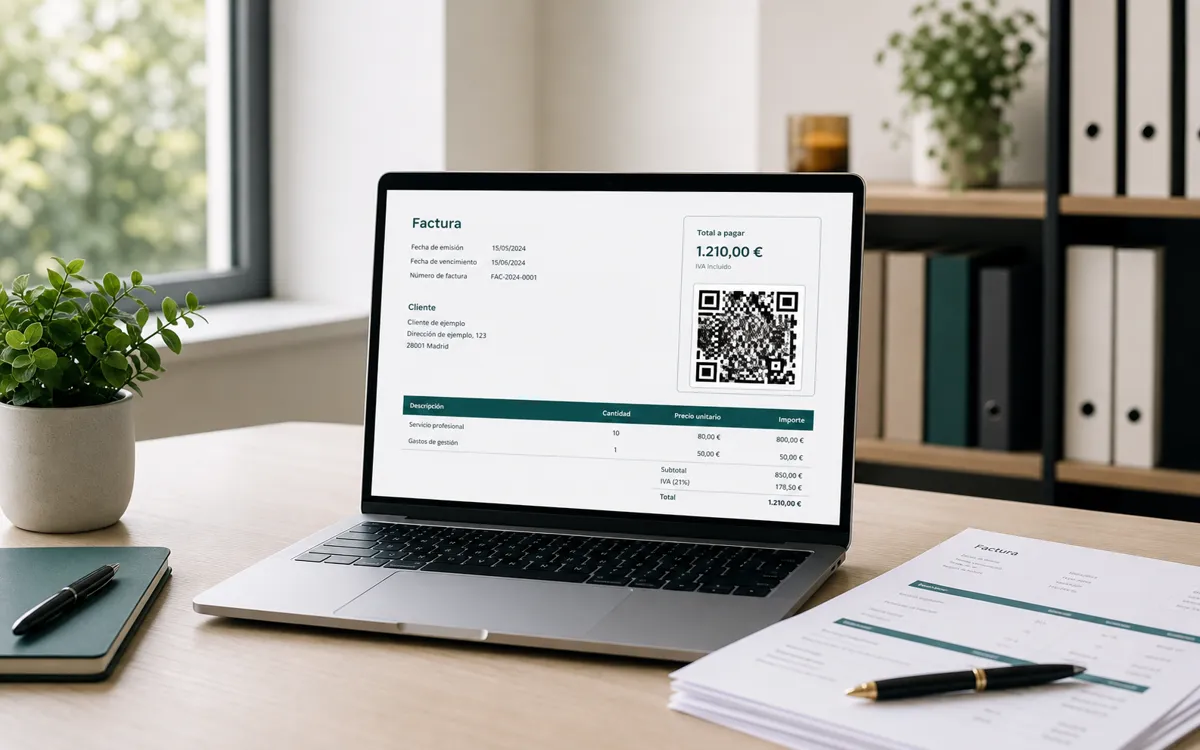
The QR code is one of the requirements for invoices issued through an affected system. In VERI*FACTU mode it allows information to be checked or reported through the AEAT's online office. By itself, however, it does not prove that an expense is deductible, that an invoice has been paid or that the issuer has met all their obligations correctly.
How can CierreListo help an accounting firm?
CierreListo helps organise client documents, make outstanding items visible, maintain internal traceability and prepare for professional review. Live record submission to the AEAT and final validation of the invoicing system must be checked separately before relying on any product for regulatory compliance.
Solutions to stay ahead
Choose what to resolve before your next close.
Find practical guidance to organise documents, prepare for the quarter-end and keep work moving.

Unhappy with your accounting firm? What you can improve without changing adviser
How to improve document organisation and communication with your accounting firm without changing adviser.
Article in Spanish
See how to resolve it
How to automate document management in an accounting firm
Automate document intake, classification and tracking while retaining human review and professional judgement.
See how to resolve it
Tax-deductible expenses for the self-employed in Spain: what you can deduct and how to substantiate it
Check which expenses you can deduct, what varies by region and which supporting documents you need.
See how to resolve itStart with the process you can already control
Try it with three clients and see how the close changes when every document has context.
For 30 days, organise outstanding documents, submissions and statuses before deciding how invoicing-system compliance fits into your workflow.